Mozart
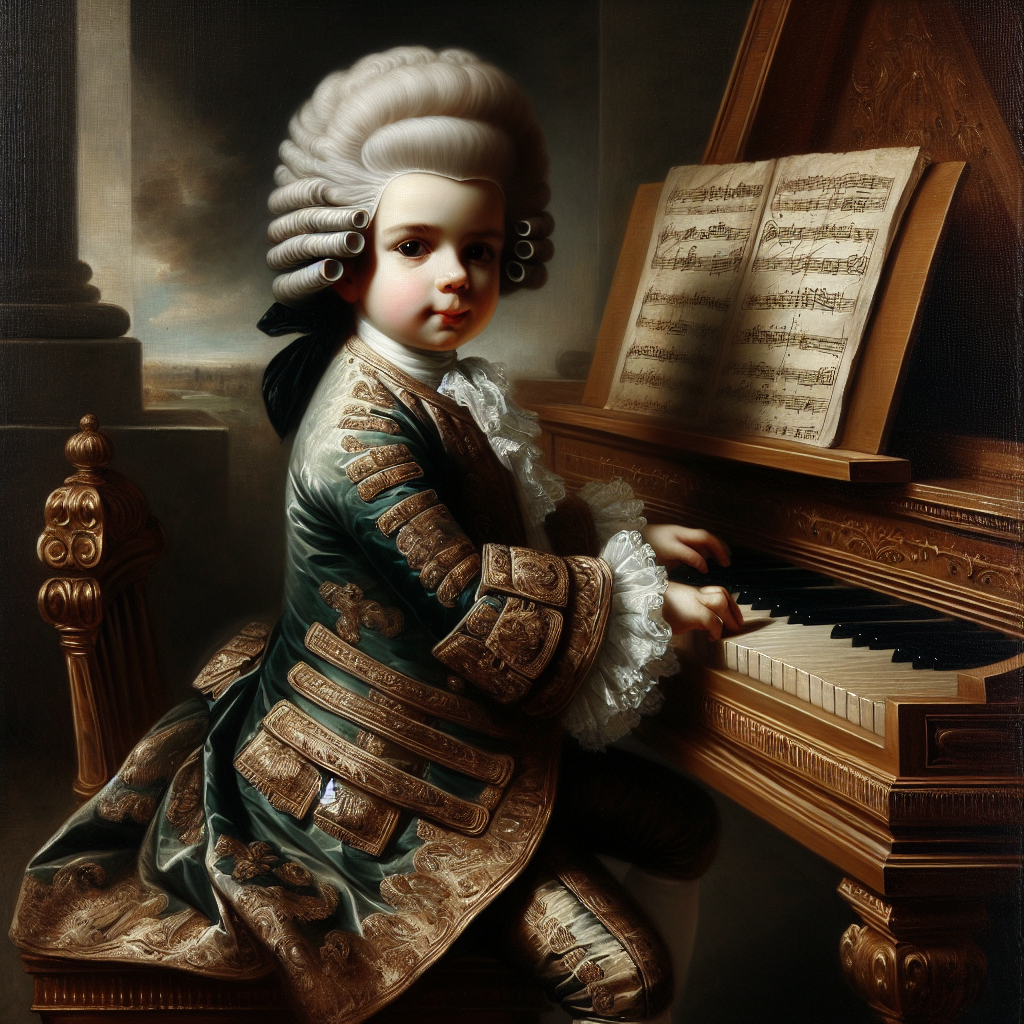
-
We detour from politics in #EuropeanBios entry 63 to learn about Wolfgang Amadeus Mozart, an undisputed musical genius who changed music forever and was also super into making jokes about farting and shitting, to a level and with a dedication that I promise you didn't expect.
-
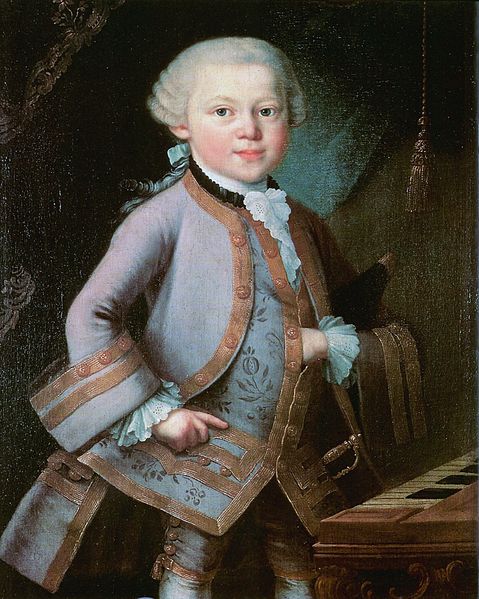
Portrait of child prodigy Wolfgang Amadeus Mozart at approximately age 6, ca. 1762 Portrait of young Mozart, ca. 1762, public domain -
In the series so far I've been trying to string my subjects together, finding connections between their lives. This is getting very easy because our remaining subjects are born very close together and it's now the 1750s, so communications and travel have improved.
-
Mozza, as I'll call him, was born in 1756, just a year after our previous subject Marie Antoinette. His family was very musical, especially his father, who was a reasonably accomplished composer and music teacher, and his elder sister Nannerl, who was herself a musical prodigy.
-
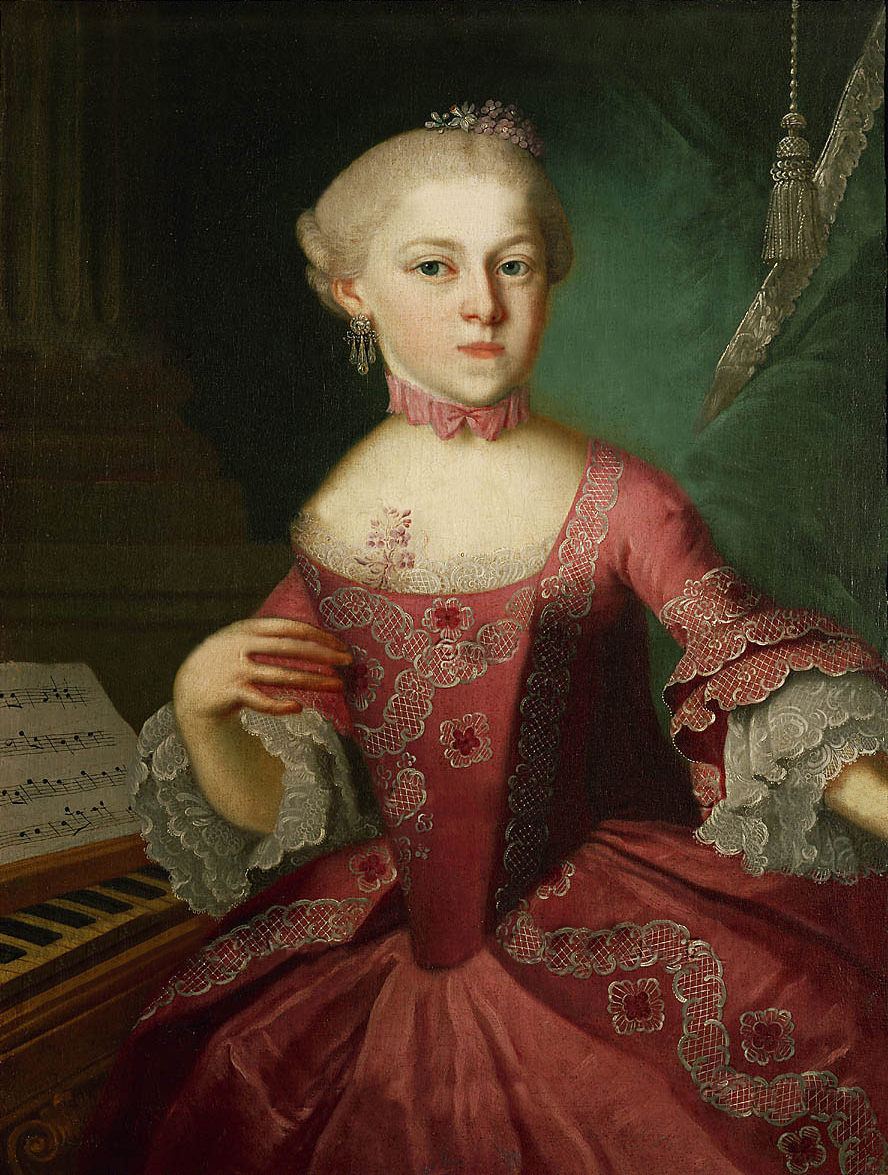
Portrait of Maria Anna Mozart (Nannerl), Mozart's elder sister, who was also a musical prodigy Portrait of Maria Anna Mozart (Nannerl), public domain -
In any other family Nannerl would have been the famous one but at 5 years old, without training of any kind, Mozza picked up the clavier and began to play. At first he was mimicking songs he'd already heard but within a year he was composing his own.
-
I was surprised to learn that Mozza predates the piano. A "clavier" is a sort of generic name for lots of piano-like instruments, but what he probably played initially is a clavichord. It looks similar but is much quieter than a piano, so you could only play it in small rooms.
-
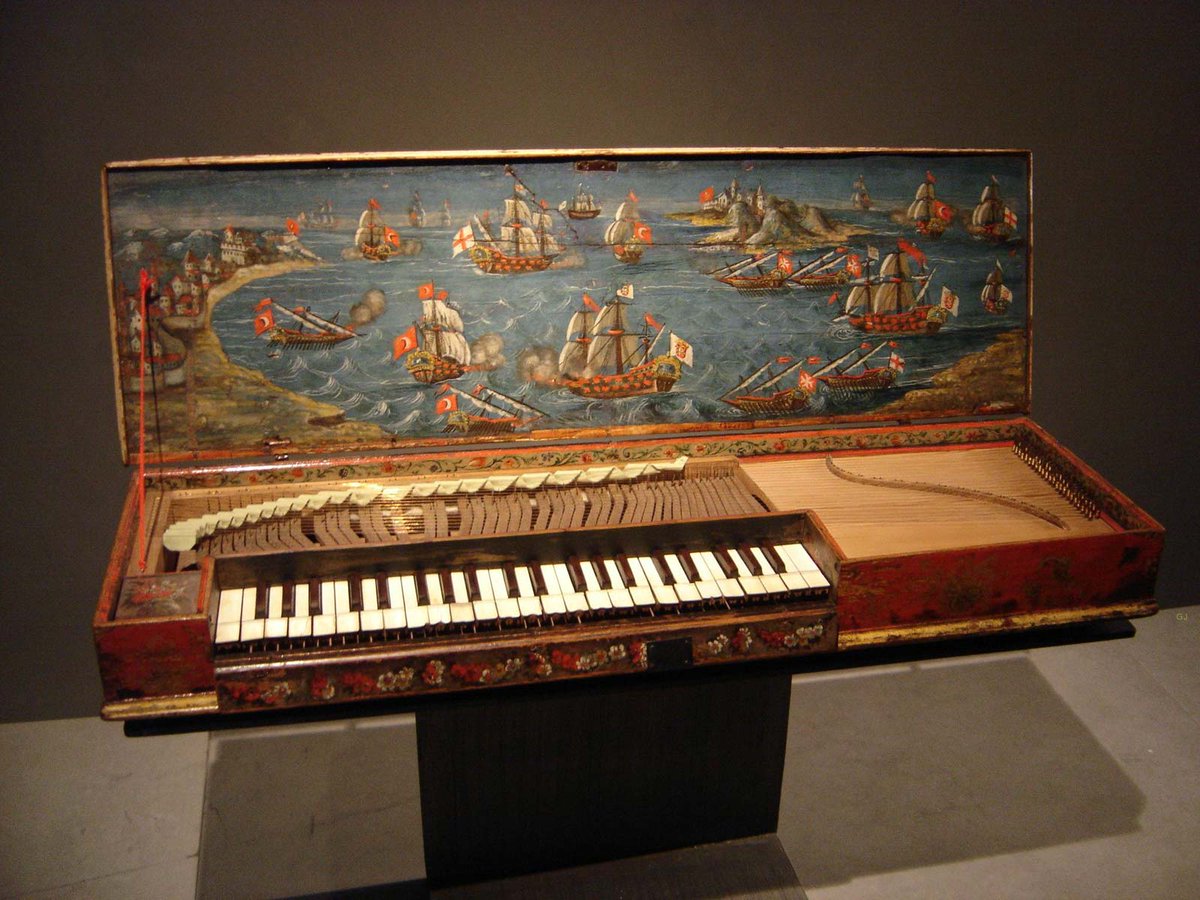
A clavichord decorated with a painted naval battle scene — the type of early keyboard instrument Mozart played as a child prodigy Decorated clavichord via Wikimedia Commons (CC BY-SA) -
The piano as we'd recognize it today was being invented over the course of Mozza's lifetime but was not yet standardized, so often when he arrived in a new town he'd be presented with a totally novel pseudo-piano instrument and have to figure out how to play it properly.
-
Mozza's father was a stage dad, much like Catherine the Great's mother had been (or rather still was, she didn't die until 1760). As a composer he immediately recognized the magnitude of his children's talents and immediately started exploiting them both.
-
Mozza's first (or possibly second) public performance was at the court of Maria Theresa, Marie Antoinette's mother, with Antoinette (then aged 7) in attendance. Then their father took them on the road for several years.
-
It was the 1700s, so a tour of Europe, moving primarily by horse-drawn coaches, was a substantial undertaking that was enormously expensive and time consuming. It was also very risky, because disease was rife and doctors were bad, and because getting paid was not guaranteed.
-
If the 1750s if you performed as a musician for a noble family, there was no question of demanding payment. Instead, you performed for free, and hoped the family would give you a "gift". The gift could be anything, from a jewelled sword to a painting and only occasionally cash.
-
There was no question of performing in a large concert hall as an individual, because there was no way to amplify sound, and the clavichord Mozart and his sister played was quite quiet. So they relied on the gifts, which often meant playing several times over weeks.
-
Keep in mind that Mozza was still a tiny child while all this was happening. One person who witnessed him perform noted that he sat at the clavier and composed brilliant, original music, then took a break to ride around the room on a stick horse and play with the cat.
-
But even with this haphazard method of income, they did very well, or rather their father did. He amassed huge sums of cash and valuable objects, but concealed how much he'd made from the rest of the family. Actually quite wealthy, he persistently claimed to be broke to his son.
-
As for disease, Mozza's father, who believed his son was a "miracle", refused to have him inoculated for smallpox, leaving it in god's hands. Thus 11 year old Mozart got smallpox and went blind for 9 days, but survived. His sister also caught it and survived as well.
-
When their tour got to London Mozza met Bach -- not *the* Bach, Johann Sebastian, who had died 10 years earlier, but Johann Christian Bach, one of the original Bach's children and a reasonably famous and influential composer in his own right.
-
By now Mozza and Nannerl were famous across Europe as musical child prodigies and were being invited to play all over Europe. In Italy, a rumor started that Mozza got his abilities from wearing a magical ring, and had to perform without the ring to prove it wasn't witchcraft.
-
But while Nannerl and Wolfgang were both child prodigies, Nannerl was merely very talented: once she reached adulthood, she was just one more among many talented adult musicians. Wolfgang on the other hand was a genius, and never stopped improving until he died.
-
Another surprise to me, because I know nothing, is that Mozart wrote a ton of operas, in fact that was mostly what he was known for during his life. I learned a lot about opera from this biography, including that the plots are extremely silly and also that nobody paid attention.
-
If you've ever wondered how audiences in the 1700s sat still for 5 hours of opera, the answer is: they didn't. The opera was a big social gathering, you wandered around the hall drinking and talking and seeing your friends, and only stopped to listen for the occasional big solo.
-
In fact, the average opera goer wouldn't even see the whole opera in one night. They'd show up to a few performances, sometimes early, sometimes late, and eventually see the whole thing. It all sounds quite fun and it's a real shame the culture around it changed.
-
A lot of the music Mozza wrote was extremely specifically tailored to the particular singer. In fact a lot of his professional life was spent dealing with the dramatics of various famous singers who demanded better songs or more stage time and what have you, he hated it.
-
Meanwhile Mozza's dad was doing all of this stage-fathering as a kind of side-gig to his actual job, but eventually his incredibly understanding boss got sick of him being absent for literally years at a time. So for Mozza's next tour dad stayed at home and he went with his mom.
-
This went about as poorly as can be imagined. They went to Paris, had trouble finding gigs, mis-managed their money, and were going broke. Their lack of funds meant they delayed calling a doctor when his mom got sick, and she died in Paris when Mozart was 22.
-
Mozza and his dad had a history of sending each other letters that stretched the truth to breaking point, but Mozza really upped his game this time: after his mother's death, he sent one letter saying she was merely ill, followed immediately by a second to say she was dead.
-
This was ostensibly intended to soften the blow but mostly it seems calculated to deflect blame. Mozza sent many other letters at the time to other people lamenting what a hardship her death was -- for him -- and sold her wedding ring to pay some of her medical bills.
-
This is just one example of the way in which Mozza and his dad were basically assholes to each other for their entire lives, a never-ending series of guilt-trips and lies in both directions, leaving both of them thoroughly sick of the other.
-
With his father stuck at home and his mother dead Mozza was now de facto his own man. At age 26 he got married to Constanze Lange, who didn't seem to mind that she was a very evident second choice after Mozza had spent years trying and failing to woo her older sister Aloysia.
-
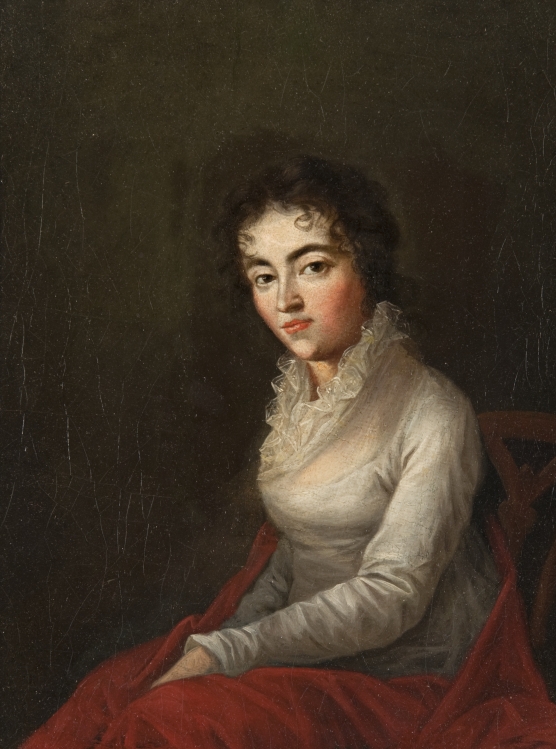
Portrait of Constanze Weber Mozart, Mozart's wife, who outlived him by 50 years Portrait of Constanze Weber Mozart, public domain -
A growing family -- they had six kids, of whom 2 survived infancy, which was pretty good going for the 1700s -- meant growing expenses, and although by now Mozza was famous and also prodigiously productive, he seemed to be constantly broke and in debt.
-
The historical record is sketchy as to why. It's possible that like his father he was simply lying about being broke to avoid people asking him for money. It's also possible he had a gambling problem; he was a huge fan of playing billiards, often composing while he played.
-
And through all of this, his entire life, as I mentioned at the beginning, he was making poop jokes. Just over and over, constantly, in letter after letter. Mozart's poop jokes were such a huge part of his life they have their own wikipedia page:
-
Here's one written when he was 21 to his cousin, with whom he was having some kind of sexual affair. The reference to "shit in your bed" appears over and over in these letters and was presumably some sort of idiom, although what it means other than the obvious is unclear.
-
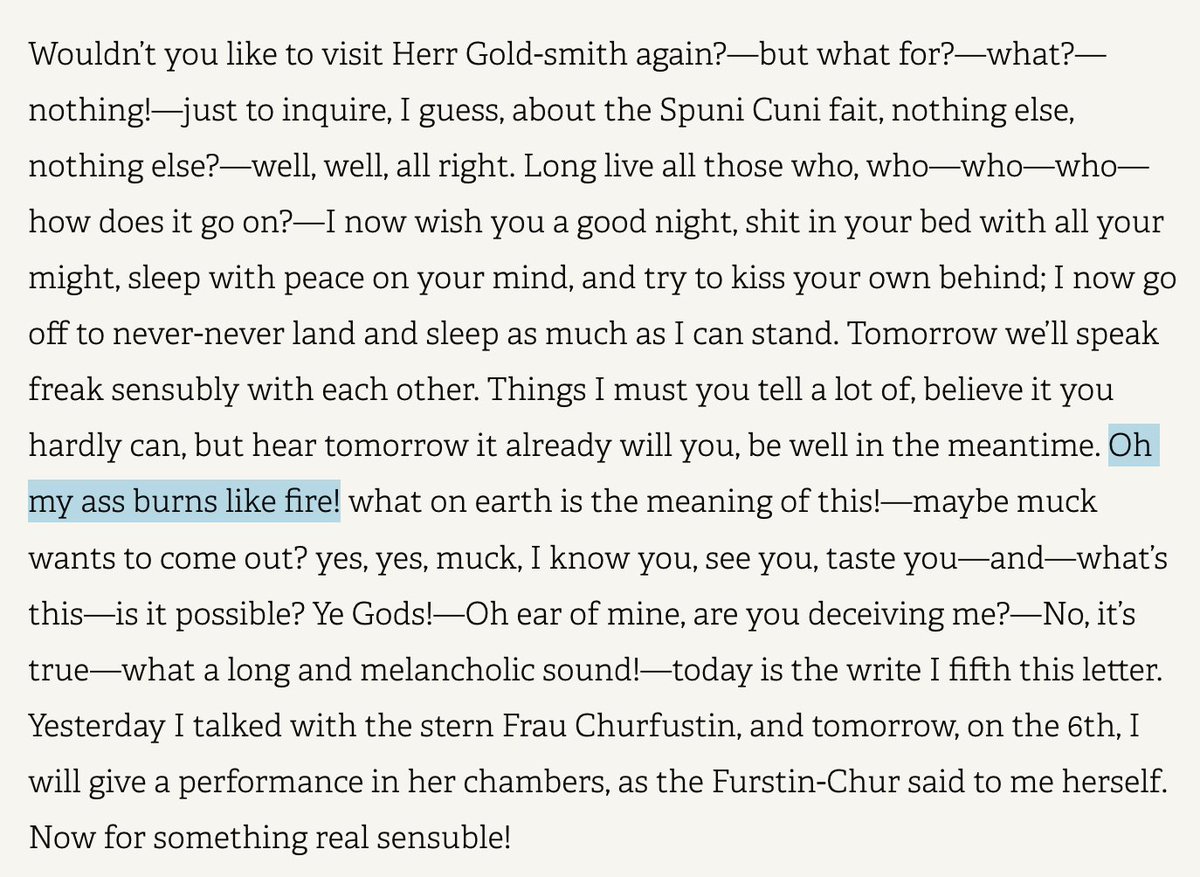
An excerpt from one of Mozart's many scatological letters, written to his cousin with whom he apparently had a flirtatious relationship Mozart letter excerpt, public domain -
In the same letter he says "Oui, by the love of my skin, I shit on your nose, so it runs down your chin." He wrote a *lot* of letters like this. So many. A scholar once went to the trouble of compiling a list of *just* the scatalogical letters we know he wrote and to whom:
-
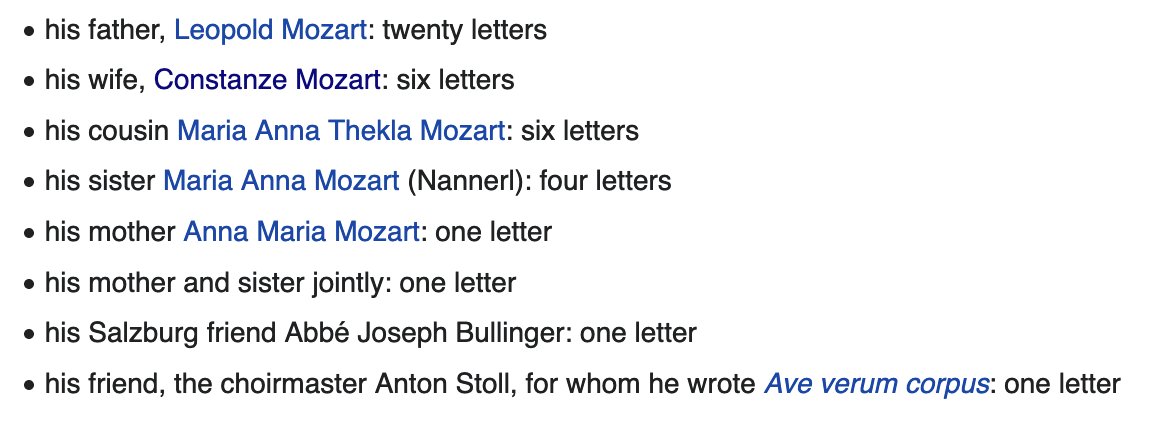
Wikipedia list of the known scatological letters written by Mozart and to whom — the "Mozart and scatology" article Screenshot from Wikipedia article on Mozart and scatology -
He also put it into his music. This beautiful piece of music is titled "Leck mich im Arsch", which literally translates as "Lick me in the ass" but has the same sense as "kiss my ass" (so "shit in your bed" is probably also not meant literally).
-
He continued in this vein -- writing amazing music, earning vast sums of money, spending vast sums of money, making poop jokes constantly -- until at age 36, a combination of illness and over-work led to his death.
-
There's a story that Mozart died penniless, which he didn't, although he had substantial debts. He was given a very low-key funeral, but that's because the local lord at the time had declared (very unpopularly) that fancy funerals were old-fashioned and nobody could get one.
-
Despite a short life Mozza was unbelievably productive. Over 600 pieces of his music survive -- that's one brand new piece every 18 days, starting at age 5, not counting a huge number that were lost or simply never written down.
-
In terms of legacy it's hard to beat being one of the most famous musicians of all time. Fairly famous in life, his fame and legend rose further after death. His wife survived him and remarried a man so overshadowed that his gravestone reads "Mozart's widow's second husband".
-
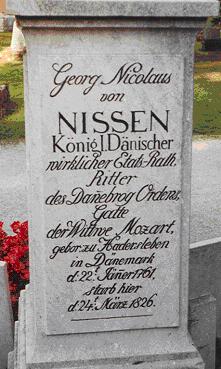
Gravestone of Georg Nikolaus von Nissen, Constanze Mozart's second husband, which reads "husband of Mozart's widow" Gravestone of Georg Nikolaus von Nissen by Hugo Oestergaard-Andersen via Wikimedia Commons (public domain) -
But really the revelation for me is that the culture of classical music, so staid and refined, the highest of high culture, rests on a foundation laid by a genius who was constantly making poop jokes and giggling about them. He was probably fun at parties.
-
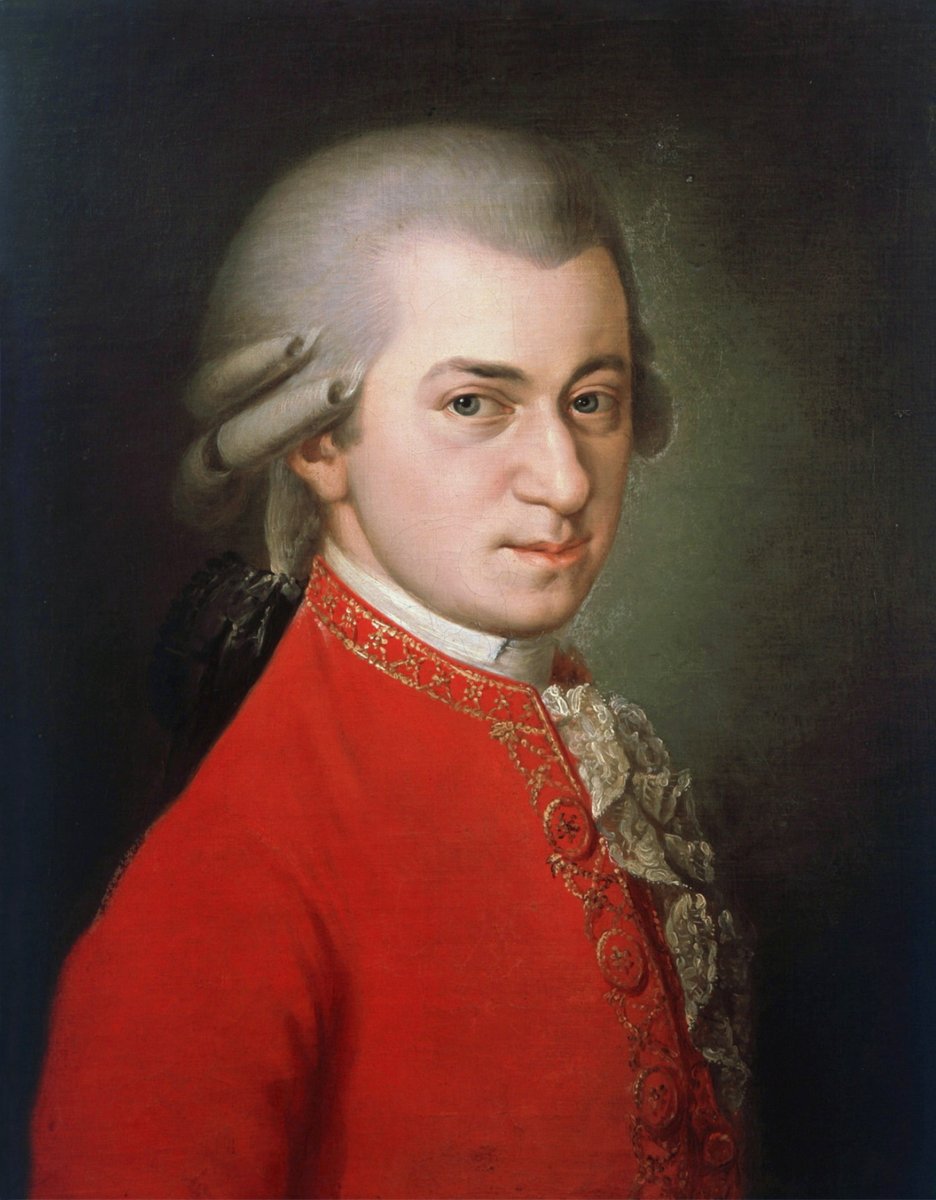
Portrait of Wolfgang Amadeus Mozart, attributed to Barbara Krafft, 1819 Barbara Krafft, 1819, public domain
- Previously: Marie Antoinette
- Next: Maximilien Robespierre
- Full list
Text and images copyright © 2020-2023 Laurie Voss
except where indicated
except where indicated